HIPAA-Compliant Analytics: Architecting Secure Cloud Data Environments for Healthcare
Building analytics infrastructure on patient data requires more than signing a Business Associate Agreement with your cloud provider. This guide covers the architectural decisions, de-identification techniques, and compliance controls that separate a genuinely secure healthcare data environment from one that only looks compliant on paper.

Healthcare organizations are sitting on some of the most valuable and most dangerous data in existence, and the gap between extracting insight from it and violating federal law is narrower than most analytics teams realize. The healthcare data analytics market is projected to reach $93.8 billion by 2030, yet a 2024 IBM Cost of a Data Breach report placed the average cost of a healthcare breach at $9.77 million, the highest of any industry for the thirteenth consecutive year. Building HIPAA-compliant analytics infrastructure is not a compliance checkbox exercise. It is a foundational architectural decision that determines whether your data program survives contact with reality.
1. The Cost of Non-Compliance The average healthcare data breach costs $9.77 million, making compliant architecture not just a legal obligation but the single highest-ROI investment a healthcare data team can make before any analytics work begins.
2. De-identification Requirements: De-identification under HIPAA Safe Harbor requires removing 18 specific identifiers, and most teams underestimate how many of those identifiers survive standard anonymization pipelines, particularly quasi-identifiers like ZIP codes and admission dates.
3. Access Control Architecture: Role-based access control alone is insufficient for PHI environments: column-level security, row-level filtering, and audit logging must operate together as a layered system, not as independent features configured separately.
4. Cloud Eligibility vs. Compliance: Cloud-native healthcare architectures on AWS, Azure, and GCP all offer HIPAA-eligible service tiers, but eligibility is not the same as compliance. Teams must configure Business Associate Agreements, encryption at rest and in transit, and logging policies explicitly.
5. The Biggest Breach Vector: Most compliance failures in analytics environments come from data movement, not data storage: pipelines that pull PHI into non-compliant staging zones, BI tool caches, or exported CSVs represent the highest-probability breach vector in practice.
The Big Picture
Healthcare analytics has matured rapidly over the last five years. Hospital systems are no longer asking whether they should use cloud infrastructure for patient data. They are asking how to do it without creating liability. This shift has moved HIPAA compliance from the legal department's problem to the data engineering team's daily reality. Analysts are now expected to understand not just SQL and Spark but also what constitutes Protected Health Information, when a Business Associate Agreement is required, and how encryption key management interacts with HIPAA's technical safeguard requirements. The pressure driving this is coming from two directions simultaneously. On one side, hospital administrators, population health teams, and operations leaders want faster access to data for staffing decisions, readmission reduction, and capacity planning. On the other side, OCR enforcement actions and state-level privacy laws are tightening the definition of what counts as compliant handling of patient information. The 2024 HIPAA Security Rule proposed updates signaled a shift toward mandatory encryption and more prescriptive technical controls, a direction that is already influencing how leading health systems architect their environments. What makes this hard is that the two pressures are not naturally aligned. Making data more accessible to analysts often means moving it closer to general-purpose tools that were never designed with PHI in mind. Making data more secure often means adding friction that slows down the business questions that analytics exists to answer. The teams that get this right do not choose one side. They build architectures that enforce compliance at the infrastructure level so analysts can work freely within a bounded, auditable environment.
What's Delivering Measurable Impact
Dedicated PHI Zones with Strict Network Perimeters
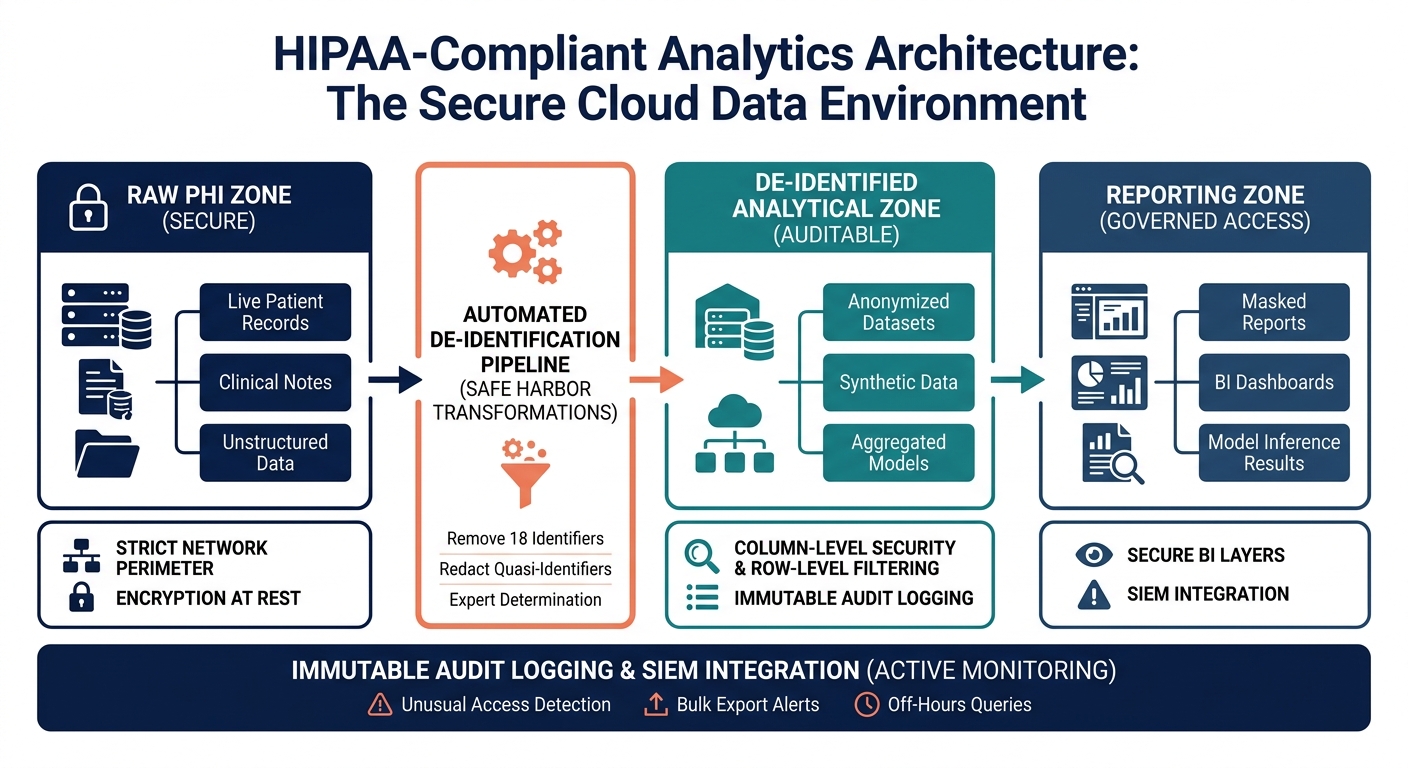
The most effective architectural pattern we have seen in production healthcare environments is the separation of data environments into clearly defined zones: a raw PHI zone, a de-identified analytical zone, and a reporting zone. Each zone operates under different access controls, encryption standards, and egress rules. Data moves between zones only through audited, automated pipelines that apply de-identification or aggregation transformations before promotion. This eliminates the most common failure mode, which is an analyst with good intentions pulling raw PHI into a personal workspace to answer a one-off question.
Automated De-identification Pipelines Using Safe Harbor and Expert Determination
HIPAA provides two paths to de-identification. Safe Harbor requires removing 18 specific data elements. Expert determination requires statistical verification that re-identification risk is sufficiently low. In practice, automated pipelines that apply Safe Harbor transformations at ingestion time are the more scalable solution for analytics environments. Tools like AWS Comprehend Medical and Microsoft Presidio can identify and redact PHI fields in semi-structured and unstructured data, including clinical notes, which are often the highest-value and highest-risk data type in the environment.
Column-Level Security and Row-Level Filtering in BI Layers
Most healthcare organizations implement database-level access controls but leave their BI layer as an open surface. A user with a Tableau or Power BI seat can often export data to a local file, connect to sources directly, or view columns they were never intended to access because the security model was applied at the warehouse, not at the semantic layer. Effective HIPAA-compliant BI architecture applies column masking and row-level security policies at the semantic layer, enforced server-side, so that data governance rules travel with the report regardless of how it is accessed.
Synthetic Data Generation for Model Development
One of the most underutilized techniques in healthcare analytics is synthetic data generation for model training and testing. Tools like Synthea, which is an open-source patient population simulator, and commercial platforms like Gretel.ai allow data science teams to build and validate predictive models including patient flow forecasts, readmission risk scores, and ED wait time models without operating directly on live PHI. Synthetic data removes the compliance burden from the development lifecycle entirely and allows faster iteration without the legal review cycle that PHI-based development triggers.
Immutable Audit Logging and SIEM Integration
HIPAA's technical safeguards require audit controls that record and examine activity in systems containing PHI. Most cloud platforms provide native logging through services like AWS CloudTrail, Azure Monitor, and GCP Cloud Audit Logs, but these logs are only useful if they are actively monitored. Connecting cloud audit logs to a Security Information and Event Management system with pre-built healthcare alerting rules allows teams to detect unusual data access patterns, including bulk exports, off-hours queries, and access from unexpected geographic locations, before they become breach events.
What's Still Overpromised
Real-Time PHI Analytics at Scale
The vendor pitch for real-time analytics on patient data sounds compelling, but in most healthcare environments the compliance controls required for PHI processing introduce latency that undermines the "real-time" claim. Encryption, tokenization, access policy evaluation, and audit logging all add overhead. What most health systems actually need is near-real-time analytics on de-identified operational data, which is technically achievable, rather than sub-second queries on live patient records, which carries both performance tradeoffs and significant legal exposure that vendors rarely explain clearly.
Fully Automated HIPAA Compliance Through Cloud-Native Tools
Every major cloud provider markets their healthcare compliance offerings as comprehensive solutions. The reality is that HIPAA compliance is a shared responsibility model and the cloud provider's portion covers infrastructure configuration, not data governance, access policy design, or contractual obligations with downstream users. Turning on a HIPAA-eligible service tier and signing a BAA does not make your environment compliant. The analytical and engineering teams still own the decisions about who accesses what data, how it moves, and what controls exist at the application and semantic layers.
LLMs and Generative AI Applied Directly to PHI
In 2026, there is enormous interest in using large language models to analyze clinical notes, summarize patient histories, and assist in diagnosis. Most of the implementations being pitched involve sending PHI directly to third-party model APIs, which in nearly every case constitutes a HIPAA violation unless the vendor has a signed BAA and a documented data processing agreement that meets the Security Rule's technical safeguard requirements. The safer path, which is also the less exciting marketing story, involves fine-tuning models on de-identified or synthetic data and running inference in a private, air-gapped compute environment.
Implementation Framework
Where to Start
Before writing a single line of pipeline code, the first assessment should map every data flow that touches PHI from its source system through to its final consumption point, whether that is a BI dashboard, an exported report, or a model inference endpoint. This data flow mapping exercise almost always reveals PHI crossing into environments that were never designed to handle it, including third-party analytics tools, shared cloud storage buckets, and development databases that mirror production. The architectural strategy should then be built around enforcing de-identification at the earliest possible point in the pipeline, so that the analytical environment downstream operates on the lowest-risk data representation that still answers the business question.
Where Most Teams Go Wrong
The most common and most expensive mistake is treating HIPAA compliance as a one-time configuration task rather than an ongoing enforcement mechanism embedded in the pipeline itself. Teams configure encryption and access controls during the initial build, then add new data sources, new BI connections, or new transformation steps without running those additions through the same compliance review. Within eighteen months, the original compliant architecture has accumulated enough undocumented changes that the compliance posture is effectively unknown. The fix is to build compliance validation into the CI/CD process for data pipelines, so that any new data asset that touches PHI fields triggers an automated policy check before it reaches the analytical zone.
Critical Success Factor
The Road Ahead
The regulatory direction is clear. The proposed 2024 HIPAA Security Rule updates signal a future where encryption is mandatory rather than addressable, where audit controls must be demonstrably active rather than theoretically present, and where risk assessments must be documented with greater specificity. Health systems that have invested in proper architectural foundations now will be positioned to satisfy these requirements without a rebuild. Those who have treated compliance as a documentation exercise rather than an engineering discipline will face significant rework and potentially enforcement action, as the rules tighten. The analytics opportunity in healthcare is genuinely significant. Patient flow optimization, predictive readmission reduction, operational staffing models, and population health stratification are all tractable problems with measurable ROI when built correctly. The teams that will capture that value are the ones that treat compliance architecture as a capability rather than a constraint. If your organization is working through any part of this, from initial data environment design to retrofitting controls onto an existing pipeline, our team at Alfa Analytics has done this work in production healthcare environments. Book a consultation and let us walk through what your current architecture actually exposes before a regulator or a breach does it for you.
Written by Ali Raza
Founder and CEO at Alfa Analytics
Business-first Data Strategist and AI Consultant who transforms raw information into high-impact growth engines. Expert in advanced analytics ecosystems, predictive modeling, and executive BI dashboards — ensuring every data initiative directly drives revenue, efficiency, and strategic clarity.
Ready to transform your data into results?
Our team has delivered 400+ analytics projects across 18 industries. Book a free 30-minute consultation to discuss how we can help.
More from Alfa Analytics
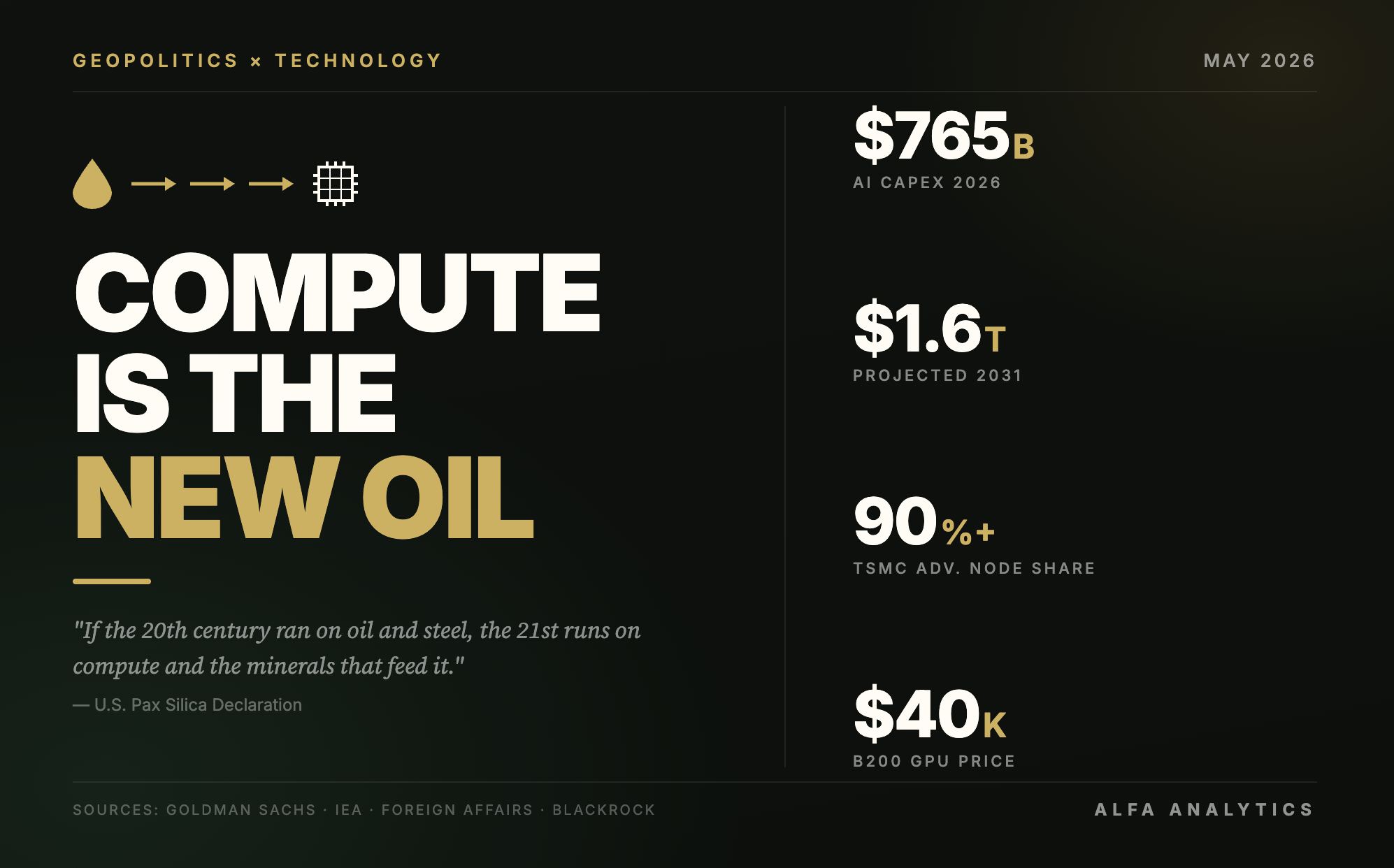
Compute Is the New Oil: Here Is the Proof
The four largest hyperscalers are projected to spend $765 billion on AI infrastructure in 2026, and BlackRock is already calling compute the next crude oil futures market. This post breaks down the economic, geopolitical, and strategic proof that compute has crossed from utility to critical resource, and what that means for how you plan your technology investments.

5 Data Analytics Strategies That Actually Drive Revenue Growth
Companies leveraging customer analytics are 23% more profitable. This guide covers the five proven analytics strategies — CLV modeling, churn prediction, dynamic pricing, attribution modeling, and operational optimization — with implementation frameworks and real-world results.